Paphos Guide
Where ancient mythology meets Mediterranean shores
Overview
Paphos is a city steeped in mythology and layered with over four thousand years of human history. Situated on the southwestern coast of Cyprus, it is most famously associated with Aphrodite, the Greek goddess of love, who according to legend rose from the sea foam at nearby Petra tou Romiou.
The entire town of Kato Paphos is a UNESCO World Heritage Site, a distinction it has held since 1980, making it one of the most archaeologically significant areas in the eastern Mediterranean.
Unlike the fast-paced energy of Limassol, Paphos offers a more relaxed, unhurried atmosphere that appeals to visitors who want to combine beach relaxation with genuine cultural immersion. The pace of life here is distinctly slower, and the locals take pride in their town's deep connection to the past. You can wander from a two-thousand-year-old Roman villa adorned with beautiful floor mosaics to a modern seafood restaurant overlooking the medieval harbour in the space of a five-minute stroll.
Modern Paphos blends its ancient identity with a comfortable, tourist-friendly infrastructure that has only improved since the city served as a European Capital of Culture in 2017.
Today it attracts a diverse mix of visitors: archaeology enthusiasts, beach lovers, nature hikers drawn to the wild Akamas Peninsula, and families seeking a safe, sunny destination with plenty to see and do.
Whether you come for a long weekend or an extended stay, Paphos rewards curiosity at every turn.
Compared to Limassol, Paphos is more compact, less traffic-congested, and significantly more affordable for dining and accommodation. It also benefits from its own international airport, making it one of the most convenient destinations in the eastern Mediterranean to reach directly. The growing expat community, particularly from the United Kingdom, Germany, and Scandinavia, means English is spoken widely and the service culture is well-attuned to international visitors.
Yet for all its tourist infrastructure, Paphos retains a genuinely Cypriot character that larger resort destinations sometimes lose. Step away from the harbour tourist strip and into the back streets of Ktima, and you will find kafeneia (traditional coffeehouses) where elderly men play tavli (backgammon), butchers hanging souvlaki in the morning sun, and neighbourhood bakeries pulling warm flaounes from the oven.
Who Is Paphos For?
Paphos is an excellent match for couples seeking romantic sunsets and historical walks, families who want safe beaches and plenty of daytime activities, history enthusiasts drawn to one of the richest archaeological sites in the Mediterranean, and nature lovers planning to explore the Akamas Peninsula on foot or by boat.
It is also increasingly popular with digital nomads and remote workers thanks to reliable internet, affordable cost of living, and a comfortable year-round climate.
Golfers will find the Aphrodite Hills Resort championship course only 20 minutes away, and divers will discover some of the clearest visibility in the eastern Mediterranean.
The one group that may find Paphos lacking is those seeking a vibrant late-night clubbing scene; for that, Limassol or Ayia Napa are better choices.
History
Ancient Origins
The story of Paphos stretches back to the Neolithic period, but it was during the Hellenistic and Roman eras that the city truly flourished. Ancient Nea Paphos, founded in the late fourth century BC, served as the capital of Cyprus for nearly six hundred years under both Ptolemaic and Roman rule.
The Roman proconsul Sergius Paulus governed from here, and according to the Acts of the Apostles, it was in Paphos that the Apostle Paul preached and converted the Roman governor to Christianity around AD 45, making Cyprus one of the earliest regions in the world to be governed by a Christian.
Roman Splendour & UNESCO Heritage
The archaeological remains of this period are extraordinary. The Paphos Mosaics, discovered in the floors of wealthy Roman villas, depict scenes from Greek mythology with an artistry that rivals anything found on the Italian peninsula.
The Tombs of the Kings, a vast underground necropolis carved from solid rock during the Hellenistic period, served as burial chambers for high-ranking officials and aristocrats. Despite their name, no actual kings were interred here, but the scale and grandeur of the tombs left early explorers convinced that only royalty could have warranted such elaborate resting places.
Medieval & Modern Eras
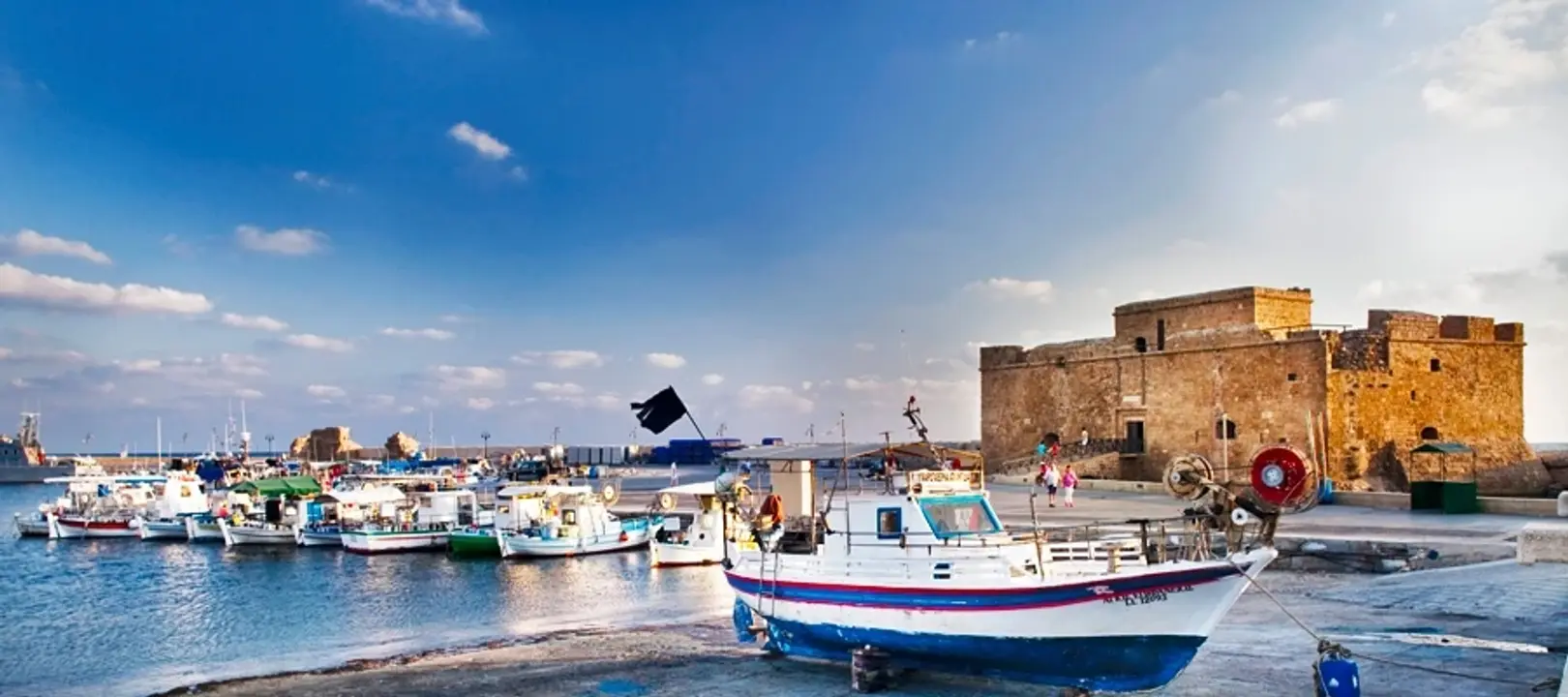
Paphos passed through Byzantine, Lusignan, Venetian, Ottoman, and British hands, each period leaving its own mark on the landscape. The medieval castle that stands sentinel over the harbour was originally built by the Byzantines, rebuilt by the Lusignans, dismantled by the Venetians, and reconstructed by the Ottomans.
It is a fitting symbol of a city whose identity has been shaped by the layering of successive civilisations, each contributing something to the rich cultural mosaic that visitors experience today.
The British period (1878-1960) brought modern infrastructure and the English language, both of which remain influential. After independence, Paphos developed steadily as a tourist destination, accelerating dramatically after the opening of Paphos International Airport in 1983.
The Turkish invasion of 1974, which divided the island, had a significant impact on the Paphos region as thousands of Greek Cypriot refugees from the north resettled here, bringing their own traditions and enriching the cultural fabric of the district.
Today, the archaeological wealth of Paphos serves not just as a tourist attraction but as a source of deep civic pride for residents who see themselves as custodians of one of the Mediterranean's most important heritage cities. Ongoing excavations continue to uncover new finds, and the expansion of the Archaeological Park is a long-term project that promises to reveal even more of ancient Nea Paphos in the coming decades. For visitors with even a passing interest in history, Paphos offers an experience that is genuinely difficult to match elsewhere in the region.
Culture
Festivals & Performing Arts
Paphos's designation as European Capital of Culture in 2017 catalysed a transformation of the city's cultural landscape that continues to resonate years later. The programme, themed “Linking Continents, Bridging Cultures,” invested in new open-air venues, public art installations, and performance spaces that have become permanent fixtures.
The medieval castle now serves as a dramatic backdrop for the annual Paphos Aphrodite Festival, an open-air opera event held each September that draws international performers and audiences.
The Paphos International Festival, running from June through September, stages theatre, dance, and music performances at various historic sites, including the ancient Odeon amphitheatre and Markideio Theatre.
Museums & Galleries
Beyond the festivals, the city has a growing arts scene. Several independent galleries in the Ktima (upper town) area showcase work by Cypriot and international artists, and the Paphos District Archaeological Museum houses a compact but impressive collection spanning the Chalcolithic period to the Middle Ages.
The Ethnographic Museum of Paphos, located in the former home of the Eliades family, offers insight into traditional Cypriot domestic life with rooms furnished exactly as they were a century ago.
For a more contemporary vibe, the Technopolis 20 cultural centre hosts rotating exhibitions, workshops, and live music in a restored 1920s industrial building.
Religion & Traditions
Religion and tradition still play a central role in daily life. The Paphos district is home to dozens of Byzantine churches and monasteries, several housing valuable icons and frescoes.
The Monastery of Agios Neophytos, 9 kilometres north of Paphos, is particularly notable: founded in the twelfth century by a hermit who carved his cell directly into the cliff face, it contains remarkable wall paintings that rank among the finest surviving examples of Byzantine art in Cyprus.
Religious feast days, name-day celebrations, and seasonal festivals like the Limassol Carnival and grape harvest events in the wine villages provide glimpses into authentic Cypriot culture that has remained largely unchanged for generations.
Climate
Overview
Paphos enjoys a typical eastern Mediterranean climate with hot, dry summers and mild, wet winters. Summer temperatures from June through September regularly reach 30-34 degrees Celsius, though the persistent sea breezes along the coast keep Paphos feeling slightly cooler than inland cities like Nicosia.
The west-coast position means Paphos benefits from cooling onshore winds that Limassol, tucked into the south coast, does not always receive. Humidity can be noticeable in July and August but rarely becomes oppressive near the water.
Seasons
Winter in Paphos is gentle by European standards. December through February sees average highs of 16-18 degrees Celsius, with rainfall concentrated in short, sharp bursts rather than prolonged grey spells. The sea temperature stays swimmable from May into November, dipping to around 17 degrees in February.
Spring, from March through May, and autumn, from October through November, are arguably the most pleasant seasons to visit: warm enough for the beach, cool enough for hiking the Akamas trails, and far less crowded than the peak summer months.
Monthly Overview
January-February: Coolest months, highs of 16-17°C. Occasional rain but many sunny spells. Great for sightseeing without crowds. March-April: Spring arrives quickly, wildflowers blanket the Akamas. Temperatures climb from 19 to 23°C. Sea still cool for swimming but warming.
May-June: Ideal conditions, 25-30°C, dry and sunny. Sea warm enough for swimming from mid-May. July-August: Peak heat, 32-34°C, near-zero rainfall. Busiest tourist period.
September-October: Warm sea (26-27°C), pleasant air temperatures of 27-30°C dropping to 24-26°C by late October. Excellent value. November-December: Cooling to 18-21°C with increasing rain. Many tourist facilities reduce hours but restaurants and attractions remain open.
April through June and September through November offer the ideal balance of warm weather, fewer crowds, and lower accommodation prices. For guaranteed swimming weather and the liveliest atmosphere, July and August are peak season.
Summer (Jun-Sep): Light cotton clothing, swimwear, high-SPF sunscreen, a wide-brimmed hat, sunglasses, and comfortable walking shoes for archaeological sites. A light cardigan for air-conditioned restaurants.
Spring/Autumn (Mar-May, Oct-Nov): Layerable clothing, a light rain jacket, and hiking shoes if you plan to explore the Akamas. Winter (Dec-Feb): A warm jacket for evenings, closed-toe shoes, and an umbrella. Indoor heating in Cyprus can be inconsistent, so pack a fleece or warm layer for chilly nights.
Geography
Kato Paphos & Ktima
Paphos is naturally divided into two distinct areas that together form the city's unique character. Kato Paphos (Lower Paphos) is the coastal strip that most tourists know.
This is where you will find the harbour, the archaeological park, the majority of hotels and restaurants, and the main tourist beach strip extending north toward Coral Bay. It sits essentially at sea level and stretches along several kilometres of coastline.
The transformation of Kato Paphos over the past three decades has been remarkable: what was once a quiet fishing port with a few waterfront tavernas is now a polished tourist district with international restaurants, modern hotels, and well-maintained promenades.
Ktima (Upper Paphos), roughly two kilometres inland and sitting on a limestone ridge above Kato Paphos, is the administrative heart of the city. Ktima has a more authentic, lived-in feel with local markets, the town hall, banks, and residential neighbourhoods that see fewer tourist footprints. The two areas are connected by Apostolou Pavlou Avenue, a broad boulevard that passes through Kings Avenue Mall and can be walked in about 25 minutes or covered by a EUR 1.50 bus ride.
The Akamas & Wider Region
To the north and west of Paphos lies the Akamas Peninsula, one of the last genuinely wild landscapes in Cyprus. This protected nature reserve of rugged coastline, deep gorges, and dense Mediterranean scrub is home to endemic plant species and serves as a nesting ground for green and loggerhead sea turtles.
The Avakas Gorge, with its towering limestone walls, and the Blue Lagoon at the tip of the peninsula are among the most dramatic natural sites on the island. Heading southeast from Paphos, the landscape rises into rolling foothills covered with vineyards and dotted with traditional villages, forming the Pafos wine region.
Beaches
The main beaches around Paphos form a varied coastline. Immediately in front of the hotel strip in Kato Paphos, the shoreline is mostly rocky with small sandy coves, and the main bathing area has been improved with imported sand and breakwaters.
The best sandy beach close to town is Alykes (Municipal Beach), which has Blue Flag status and good facilities including sunbed hire, showers, and lifeguards.
Further north, Coral Bay is the standout sandy beach, a wide horseshoe cove with gentle shelving that makes it ideal for families.
Beyond Coral Bay, the coastline becomes wilder and less developed as you approach the Akamas, culminating in the pristine, unspoiled sands of Lara Beach and Toxeftra.
Sunbed and umbrella hire at organised beaches typically costs EUR 2.50-5 per item per day. Many beaches are free to visit; the charge only applies to facilities. Water sports are available at Coral Bay and some hotel beaches, including jet skiing, parasailing, and stand-up paddleboarding. Sea urchins can be present on rocky stretches, so water shoes are advisable if you plan to swim away from sandy areas.
Getting There
By Air
Paphos International Airport (PFO) is the primary gateway to the western side of Cyprus and sits just 13 kilometres southeast of the town centre, a drive of roughly 15 minutes by taxi or airport shuttle.
Budget and charter carriers including Ryanair, Wizz Air, Jet2, and TUI fly direct to Paphos from cities across Europe, particularly during the April-to-October season. In winter the schedule thins out but year-round routes from London, Athens, and several Eastern European capitals remain.
A taxi from the airport to Kato Paphos costs approximately EUR 30-40, or you can pre-book a private transfer through your accommodation. Public buses also connect the airport to the town centre.
From Larnaca & Overland
If you are arriving at Larnaca International Airport (LCA), the island's larger gateway, Paphos is approximately 130 kilometres away, a drive of around 1 hour 40 minutes via the A6 motorway.
Several shuttle transfer companies operate this route, typically charging EUR 40-60 per person. For those travelling overland from Limassol, the Intercity bus service runs direct coaches to Paphos several times daily, with the journey taking about 1 hour 15 minutes and costing around EUR 7 one way.
Driving yourself from Limassol takes roughly the same time along the modern A6 motorway, which runs parallel to some of the finest coastline in Cyprus.
Many premium accommodation providers, including Premium Living, can arrange airport transfers for you in advance. This is often the most stress-free option, especially for late-night arrivals. If you plan to rent a car, all major agencies (Hertz, Avis, Europcar, Sixt) have desks at Paphos Airport. Booking online in advance is recommended during summer to secure the best rates and ensure availability.
Getting Around
Public Transport
The public bus network in Paphos is operated by OSEA Buses and covers most tourist areas reasonably well. The most useful routes for visitors are the 610 (Kato Paphos to Coral Bay), 611 (harbour to Ktima and beyond), and 615 (harbour to the Tombs of the Kings). A single trip costs EUR 1.50 and a day pass is EUR 5.
Weekly passes are also available for EUR 20. Buses run from early morning until around 7pm in winter, extending to midnight on some routes in summer. However, frequencies can be limited, especially on weekends and outside the main season. Buses are air-conditioned and generally clean, though they do not always run precisely on schedule.
Car Rental & Taxis
For exploring beyond the town, particularly the Akamas Peninsula and the hill villages, renting a car is strongly recommended. A compact car starts from about EUR 25-35 per day in the off-season, rising to EUR 40-60 in summer. Remember that Cyprus drives on the left, and roundabouts follow British convention (clockwise).
Road signage is bilingual (Greek and English), and the main roads around Paphos are well-maintained and easy to navigate. Parking in Kato Paphos can be tricky in summer, especially near the harbour, but free parking areas exist along Apostolou Pavlou Avenue and near the Tombs of the Kings.
Taxis are plentiful in Kato Paphos and can be hailed on the street or booked through your hotel. A ride from the harbour to Coral Bay costs roughly EUR 15-20. Taxi fares in Cyprus are metered and regulated: the night tariff (11pm-6am) is approximately 25% higher than the daytime rate.
Ride-hailing apps are less established in Paphos than in larger Cypriot cities, but Bolt operates in the area and can be a convenient alternative to street taxis.
Cycling & Walking
For shorter trips within Kato Paphos, cycling is increasingly popular. Several rental shops near the harbour offer bicycles and e-bikes from around EUR 10-15 per day, and a seafront path runs from the harbour area north toward Coral Bay, making for a pleasant ride of about 12 kilometres.
Walking is also a viable option within Kato Paphos: the harbour, Archaeological Park, Tombs of the Kings, and the main hotel strip are all connected by a paved coastal promenade. The walk from the harbour to the Tombs of the Kings takes about 25 minutes at a leisurely pace.
Key Sights
Paphos packs an extraordinary concentration of historical and natural attractions into a compact area. You could spend a week here and still not see everything, but even a two or three-day visit allows you to cover the highlights. Most archaeological sites are within walking distance of one another in Kato Paphos, and entry fees are very reasonable compared to equivalent sites in Greece or Italy. These are the sights you should not miss:
Archaeological & Historical Sites
- Paphos Archaeological Park (UNESCO): The crown jewel of the city, encompassing the stunning Roman mosaic floors of the Houses of Dionysus, Theseus, Aion, and Orpheus. Allow at least two hours to explore. Admission is EUR 4.50.
- Tombs of the Kings: A sprawling underground necropolis dating to the fourth century BC, with carved Doric columns and atmospheric rock-cut chambers. Best visited in the morning light. Admission is EUR 2.50.
- Paphos Castle: The compact medieval fort at the harbour's edge, originally Byzantine, rebuilt by the Lusignans and Ottomans. Climb to the roof for panoramic harbour views. Admission is EUR 2.50.
- Paphos Mosaics: Among the finest surviving Roman mosaics in the world, found within the Archaeological Park. The House of Dionysus alone contains over 550 square metres of mosaic flooring depicting mythological scenes in remarkable detail.
- St. Paul's Pillar & Chrysopolitissa Basilica: The column where the Apostle Paul was reportedly tied and lashed 39 times before converting the Roman governor. Adjacent ruins of a large early Christian basilica add to the atmospheric site. Free entry.
Natural Landmarks & Beaches
- Petra tou Romiou (Aphrodite's Rock): The legendary sea stack where Aphrodite emerged from the waves, located 25 kilometres east of Paphos along the coast road. The beach below is pebbly but photogenic, especially at sunset.
- Coral Bay: The most popular sandy beach near Paphos, a wide crescent of golden sand backed by low cliffs and dotted with sunbed concessions. Located 12 kilometres north of the harbour.
- Avakas Gorge: A dramatic limestone gorge in the Akamas Peninsula, with walls rising to 30 metres. The hike through the gorge takes roughly 40 minutes each way. Sturdy footwear recommended.
- Adonis Baths: Natural rock pools set among fig trees and waterfalls in the Akamas foothills. A private attraction with an entrance fee of EUR 9, popular with families.
- Paphos Harbour & Promenade: The picturesque harbour itself, lined with fishing boats and fringed by restaurants, is a destination in its own right. Evening strolls along the harbour mole with the castle lit up are classic Paphos.
A combined ticket covering the Archaeological Park, Tombs of the Kings, and Paphos Castle can sometimes be purchased at a reduced rate. Ask at the first ticket booth you visit. The Paphos District Archaeological Museum on Griva Digeni Avenue in Ktima is a separate admission (EUR 2.50) and well worth an hour.
Activities
Beyond the historical sights, Paphos is an excellent base for active holidays and nature-based experiences. The combination of coastline, mountain foothills, and protected wilderness within easy reach means there is something for every interest and fitness level. Many activities can be booked through your hotel or accommodation provider, or directly with local operators at the harbour:
- Boat trips from the harbour: Glass-bottom boats, pirate ship cruises, and sunset sailing trips depart daily from Paphos harbour. Half-day trips to the Blue Lagoon start from EUR 25.
- Scuba diving: Paphos has some of the clearest waters on the island. Popular dive sites include the Amphorae Caves, the wreck of the Vera K at Geroskipou, and the Jubilee Shoals. Several PADI centres operate from the harbour.
- Akamas Peninsula hiking: The Aphrodite Nature Trail (7.5 km loop) and Adonis Nature Trail (7 km loop) start from the Baths of Aphrodite near Polis. Both offer coastal views, wildflowers in spring, and the chance to spot rare orchids and Bonelli's eagles.
- Blue Lagoon boat tours: Full-day catamaran excursions to the turquoise Blue Lagoon at the tip of the Akamas Peninsula include swimming stops, lunch, and often a visit to Sea Caves. Expect EUR 40-65 per person.
- Wine village tours: The Pafos wine region includes villages like Vouni Panayias, Kathikas, Tsada, and Pano Arodes, each with small wineries offering tastings of local Xynisteri, Maratheftiko, and Commandaria varietals. Self-drive or join a guided tour.
- Aphrodite Nature Trail: Starting from the Baths of Aphrodite car park north of Polis, this well-marked loop trail rises through dense forest and offers sweeping views across Chrysochou Bay.
- Cycling: Road cyclists enjoy the quiet inland roads through the wine villages, while mountain bikers head for the marked trails in the Akamas. E-bike tours of the coast are popular for casual riders.
- Turtle watching at Lara Bay: Between June and August, conservation volunteers and rangers protect nesting green and loggerhead turtles on this remote beach. Some organised tours offer respectful night-time observation during hatching season.
- Fishing trips: Charter boats depart from Paphos harbour and Latchi for half-day or full-day deep-sea fishing excursions targeting grouper, amberjack, tuna, and swordfish. Prices from EUR 50-80 per person.
- Jeep safaris: Guided 4x4 tours through the Akamas and Troodos foothills are a popular way to reach remote viewpoints, abandoned villages, and mountain monasteries without navigating the rough dirt tracks yourself. Full-day tours from EUR 60.
- Waterpark: Paphos Aphrodite Waterpark near Kato Paphos has slides and pools suitable for all ages. A popular half-day option for families with children. Adult entry approximately EUR 38, children EUR 24.
- Golf: The Aphrodite Hills Golf Club, designed by Cabell Robinson, is just 20 minutes east of Paphos and features an 18-hole championship course with dramatic sea views. Minthis Golf Club, set among ancient olive trees near Tsada, offers a more intimate experience. Green fees start from EUR 70-120 depending on season.
Paphos is very family-friendly. Beyond the waterpark and beaches, children enjoy the glass-bottom boat trips (spotting fish and octopus through the hull), the Paphos Zoo (Bird and Animal Park) in Tala (home to giraffes, parrots, and owls), and the George's Ranch horse riding centre near Coral Bay, which offers gentle rides for beginners from age four.
Shopping
Malls & Tourist Shopping
Shopping in Paphos ranges from harbour-side souvenir boutiques to a modern mall and authentic local markets. The variety may not match a large European capital, but for a town of this size, it covers all essentials and offers some genuinely special local finds.
In Kato Paphos, the streets around the harbour are lined with shops selling handmade jewellery, Cypriot pottery, olive oil soaps, and local delicacies like carob syrup, loukoumi (Cypriot delight), and halloumi.
Kings Avenue Mall, located between Kato Paphos and Ktima on Apostolou Pavlou Avenue, is the main shopping centre with over 120 stores, home to international brands like Zara, H&M, and Marks & Spencer, along with a multiscreen cinema and food court.
It is also air-conditioned, making it a welcome refuge on the hottest summer afternoons.
Local Markets & Crafts
For a more local experience, head up to Ktima and explore the covered market area near the town hall. On Saturdays, a fruit-and-vegetable market fills the streets with seasonal produce, local honey, nuts, and spices.
For traditional crafts, look for Lefkara lace, a centuries-old tradition recognised by UNESCO, and handmade Pafos pottery in earthy terracotta tones. Village cooperatives in Kathikas and Fyti sell handwoven textiles and locally pressed olive oils that make excellent gifts.
The old streets of Ktima are also home to several antique shops and second-hand bookstores worth browsing.
Food Souvenirs
If you are looking for food souvenirs to take home, visit one of the specialist delicatessens in Kato Paphos or Ktima for vacuum-packed halloumi, local olive oil, carob syrup (a traditional Cypriot sweetener), and jars of spoon sweets made from citrus peel, walnuts, or rose petals. Cypriot Commandaria wine, the world's oldest named wine still in production, makes an excellent gift and is widely available in presentation bottles.
Food & Dining
Seafood & Meze Culture
The Paphos food scene is a wonderful mix of fresh seafood, traditional Cypriot meze, and village taverna cooking. The harbour area is lined with fish restaurants where you can sit inches from the water and eat grilled sea bream, calamari, or octopus that was swimming the same morning.
For the classic Cypriot dining experience, order a meze, an extended procession of 15 to 25 small dishes that typically includes hummus, tahini, taramasalata, halloumi, loukaniko (Cypriot sausage), sheftalia (pork meatballs in caul fat), kleftiko (slow-baked lamb), and seasonal salads.
A full fish or meat meze at a reputable taverna costs between EUR 18 and EUR 28 per person and is enough food for even the heartiest appetite.
Village Tavernas & Modern Dining
Beyond the harbour, some of the best meals in the region are found in the hill villages. Tavernas in Kathikas, Droushia, and Miliou serve home-style dishes made with ingredients grown in the kitchen garden behind the restaurant.
Look for seasonal specialities like wild asparagus omelettes in spring, snails stewed in tomato sauce, and kolokasi (taro root) cooked in lemon and celery broth. In Ktima, a handful of contemporary bistros and wine bars are pushing the boundaries of modern Cypriot cuisine, incorporating local ingredients into more refined presentations.
Casual Eating & Coffee Culture
For casual daytime eating, bakeries throughout the town sell fresh tiropita (cheese pastry), spanakopita (spinach pastry), and bourekia (pastry filled with anari cheese and mint) for a few euros. Coffee culture is strong: a traditional Cypriot coffee or a freddo cappuccino on the harbour is an essential Paphos ritual.
Breakfast and brunch have become increasingly popular in recent years, with several cafes in both Kato Paphos and Ktima offering generous English breakfasts alongside more Mediterranean options like avocado toast, shakshuka, and Greek yoghurt with local honey and walnuts. A full brunch with coffee typically costs EUR 10-16 per person.
Vegetarians and vegans will find Paphos more accommodating than you might expect. Traditional Cypriot cuisine includes many naturally plant-based dishes: louvia (black-eyed bean stew), kolokithopita (courgette pie), giant beans in tomato sauce, and dozens of vegetable-based meze dishes.
Several restaurants in Kato Paphos now also offer dedicated vegan menus. For self-catering guests, the fruit and vegetable markets in Ktima are outstanding, with seasonal produce at a fraction of UK supermarket prices.
Local Specialities to Try
Some dishes are particularly associated with the Paphos region. Loukoumades, deep-fried dough balls drizzled with honey and cinnamon, are a beloved street food served at festivals and village fairs.
Kolokasi me kota (taro root with chicken, slow-cooked in a clay pot) is a traditional dish of the Paphos countryside that you will rarely find in Limassol restaurants. The wine villages produce exceptional zivania, a potent grape spirit distilled after the wine press, often served ice-cold as a digestif.
And no visit to Paphos is complete without tasting halloumi prepared three ways: fresh and squeaky, grilled until golden, and the aged variety, which has a sharp, almost cheddar-like flavour.
| Tier | Example | Price | Notes |
|---|---|---|---|
| Budget | Bakery pie, gyros wrap, Cypriot coffee | EUR 7 - 14 | Street food, bakeries, casual take-away spots in Ktima and the harbour area |
| Mid-Range | Harbour seafood restaurant, full meze at a village taverna | EUR 15 - 30 | Most harbour restaurants and established tavernas like Hondros in Kathikas |
| Splurge | Fine dining, wine-paired tasting menu, hotel restaurant | EUR 30+ | Places like Muse Kitchen & Bar or Notios at Almyra Hotel for refined Mediterranean cuisine |
Nightlife
Evening Scene
Paphos nightlife is more relaxed and less intense than what you would find in Limassol or Ayia Napa, and that is part of its charm. The evening typically starts with sunset drinks at one of the harbour-front bars, where you can watch the fishing boats return and the castle lights come on.
The harbour promenade comes alive after dark with buskers, portrait artists, and the scent of grilling souvlaki drifting from the restaurants. From there, many visitors gravitate to Bar Street (Ayiou Antoniou Street), the main nightlife strip in Kato Paphos.
Here you will find a mix of cocktail lounges, karaoke bars, sports pubs, and a few livelier clubs that keep going until the early hours during peak season. The atmosphere is friendly and international, skewing slightly more mature than the party strips of other Cypriot resorts.
For something more sophisticated, the wine bars in Ktima offer selections of Cypriot wines in candlelit settings, and several rooftop bars in the newer hotel developments along the coast serve creative cocktails with sea views. In summer, the beach bars at Coral Bay host sunset DJ sessions and themed party nights that draw both tourists and locals. If you are looking for live music, check the programme at venues like The Place and Timothy's, both near the harbour, which regularly host acoustic acts and cover bands.
Upmarket & Hotel Bars
On special occasions and during peak summer weekends, some of the larger hotel complexes host themed pool parties and open-air events that attract a younger crowd. The Almyra and Annabelle hotels, both on the seafront, have stylish bar terraces that offer a more upmarket after-dark scene. The rooftop bar at the Almyra, in particular, is a popular sundowner spot with panoramic views across the harbour and castle.
Overall, Paphos rewards those who prefer lingering conversations over a good bottle of wine to all-night club marathons. If you are after something louder, Limassol's bigger club scene is just an hour's drive away. For a uniquely Cypriot evening experience, seek out a village paniyiri (festival), which features traditional music, dancing, and local food. These take place throughout the summer in villages across the Paphos district and are open to everyone.
Accommodation
Where to Stay
Paphos offers accommodation across every budget tier, from backpacker-friendly studios to luxury beachfront resorts. The town splits neatly into zones, and choosing the right area is key to the kind of holiday you want:
- Kato Paphos (harbour area): The most popular zone for tourists. Walking distance to restaurants, archaeological sites, and the harbour promenade. Best for those who want everything on their doorstep without needing a car.
- Coral Bay: About 12 km north of the harbour. Sandy beach, family-friendly, quieter evenings. Excellent for families with young children or those who prioritise beach access over nightlife.
- Ktima (Upper Paphos): More affordable, more local, fewer tourists. Good base for those who want an authentic experience and do not mind a short bus ride or drive to the beach.
- Tala / Tsada / hill villages: hilltop positions with panoramic views, cooler evenings, and authentic village atmosphere. Car essential but rewarded with stunning sunsets and genuine peace.
Hotels & Rentals
The premium hotel strip runs along Poseidonos Avenue in Kato Paphos, where properties like the Almyra, Annabelle, and Elysium command seafront positions. Further along the coast toward Coral Bay, several large resort complexes offer all-inclusive packages that work well for families.
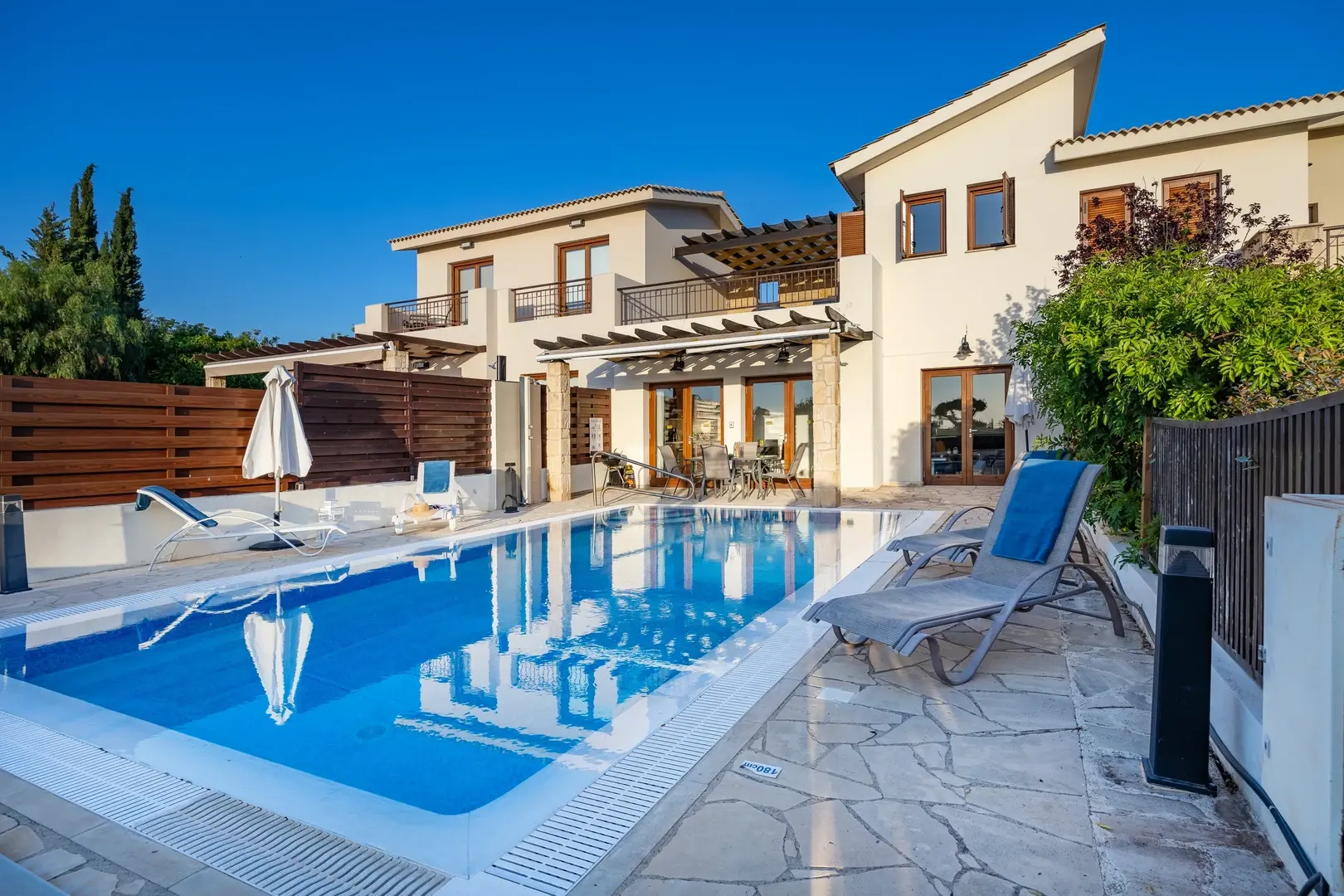
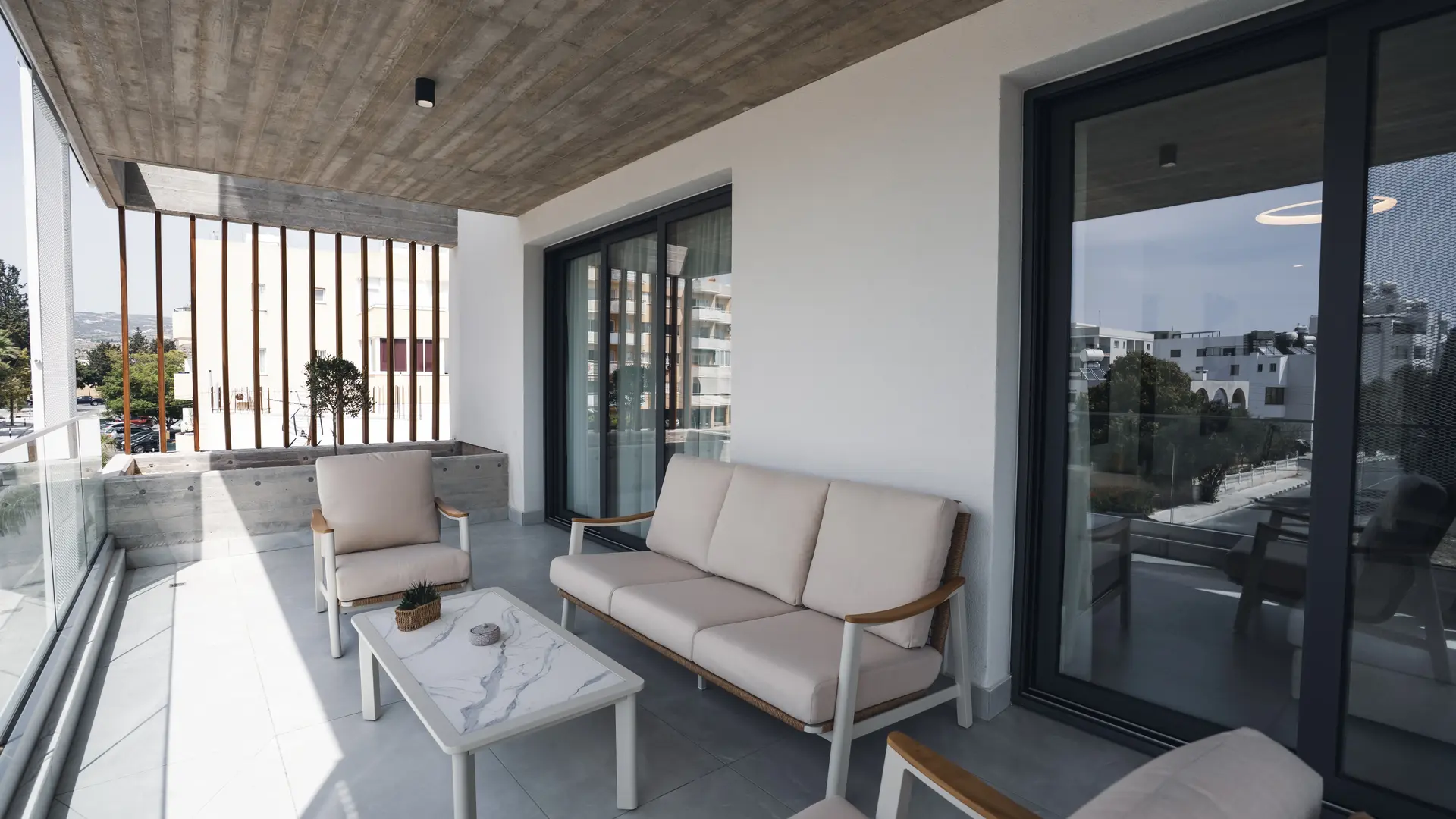
The growth of the holiday rental market has been significant in recent years, with a wide selection of privately owned villas and apartments available for short and medium-term stays, many with private pools and sea views.
For longer stays of a week or more, a self-catering villa or apartment often provides better value than a hotel, particularly for families or groups. You gain the freedom to cook your own meals (the local markets make this a pleasure), enjoy private pool and terrace space, and experience the destination at a more relaxed pace. The best rental properties in the Paphos area tend to book up well in advance for July and August, so early planning is advised for peak-season stays.
Budget Tiers
| Tier | Example | Price / Night | Notes |
|---|---|---|---|
| Budget | Studios, hostels, basic apartments | EUR 35 - 70 | Ktima area and inland locations offer the best value; expect clean, simple rooms |
| Mid-Range | Boutique hotels, quality apartments, apart-hotels | EUR 70 - 140 | Kato Paphos and Coral Bay; pools, sea views, and breakfast often included |
| Splurge | 5-star resorts, private villas with pools | EUR 140+ | Almyra, Annabelle, Elysium hotels; or premium private villas with full amenities |
For a selection of premium vacation rentals in the Paphos area, browse our Paphos properties. Each property is personally inspected, and you book directly with us, no middleman fees, no hidden charges. Need help choosing? Get in touch and our local team will match you with the perfect stay.
Safety
Crime & Personal Safety
Paphos is an exceptionally safe destination by any international standard. Cyprus as a whole has one of the lowest crime rates in the European Union, and violent crime against tourists is virtually unheard of. Women travelling alone will find Paphos comfortable and unthreatening at all hours.
The Paphos police maintain a visible presence in the harbour and tourist areas, and a dedicated tourist police unit operates during peak season to assist visitors with any concerns.
Petty theft, while rare, can occur in crowded areas, so the usual common-sense precautions apply: do not leave valuables unattended on the beach and keep an eye on your belongings in busy restaurants.
Swimming & Outdoor Safety
Swimming safety deserves mention. Some stretches of coast around Paphos have rocky entries and can develop strong currents, particularly near Petra tou Romiou and along the undeveloped western shoreline. Always swim at patrolled beaches and observe the flag system: a red flag means no swimming, yellow means caution, and green means safe conditions.
Coral Bay and the municipal beach at Alykes are the safest options for families. If you are hiking in the Akamas, carry plenty of water (at least two litres per person in summer), wear appropriate footwear, and let someone know your planned route. Mobile phone signal can be patchy in the deeper gorges.
The universal emergency number in Cyprus is 112 (or 199 for fire and ambulance, 1460 for forest fires). The Paphos police non-emergency line is +357 26 806060. EU citizens should carry their European Health Insurance Card (EHIC) or Global Health Insurance Card (GHIC) for reduced-cost treatment at public hospitals.
Health
Hospitals & Clinics
Paphos General Hospital is the main public hospital, located in the Anavargos area about 4 kilometres north of the town centre. It has an accident and emergency department that is open 24 hours. For less urgent issues, private clinics and medical centres in Kato Paphos and Ktima offer faster service and English-speaking staff.
The Iasis Hospital, a private facility on the road to Geroskipou, is particularly well-regarded and has a range of specialist departments. Many expatriates and tourists prefer the private hospitals for their shorter waiting times and higher comfort standards; a consultation with a general practitioner at a private clinic typically costs EUR 40-60.
Pharmacies & Sun Safety
Pharmacies are plentiful and easily identified by the green cross sign. They stock common medications and many items that would require a prescription in other countries are available over the counter, including basic antibiotics and anti-inflammatories.
A duty pharmacy rota ensures at least one pharmacy stays open outside normal hours, including Sundays and public holidays. The rota is published in local newspapers, posted at every pharmacy door, and can be found online by searching “Paphos duty pharmacy.” Pharmacists in Paphos generally speak good English and can offer advice on minor ailments.
Sun protection is essential in Paphos. UV levels can be extreme from May through September, and sunburn can happen within 20 minutes of unprotected exposure at midday. Use SPF 30+ sunscreen, wear a hat, and drink plenty of water, especially if you are hiking or sightseeing outdoors.
Mosquitoes can be a nuisance in the evenings, particularly near irrigated gardens and stagnant water. A plug-in repellent device or citronella-based spray is recommended for your accommodation. There are no dangerous wildlife concerns in Paphos, though the blunt-nosed viper, a venomous snake, does inhabit rural areas of the Akamas.
Bites are extremely rare and the risk is minimal if you stick to marked paths and wear closed-toe shoes when hiking.
Communications
Mobile & Internet
Mobile phone coverage in Paphos and surrounding areas is excellent, with the three main Cypriot operators (Cyta/Vodafone, Epic, and PrimeTel) all providing 4G LTE coverage across the urban areas and most rural zones. 5G coverage is being rolled out in Paphos town but is not yet universal.
EU visitors benefit from free roaming under EU regulations, so your existing plan will work as if you were at home. Non-EU visitors can pick up a prepaid SIM card from any of the provider shops in Kings Avenue Mall or on the main streets of Kato Paphos; expect to pay around EUR 10-15 for a card with several gigabytes of data.
Cyta and Epic both offer tourist-friendly packages with generous data allowances valid for 7 to 30 days.
Wi-Fi & Coverage Gaps
Wi-Fi is widely available in hotels, restaurants, cafes, and even at many beaches. Connection speeds are generally good, with most accommodation offering at least 20-50 Mbps, adequate for video calls and streaming. The Paphos municipality also provides free Wi-Fi hotspots at the harbour area and in the main squares of Ktima.
Note that mobile coverage can be weaker in the Akamas Peninsula and some remote mountain villages, so download any offline maps or guides you may need before heading into the wilds. Google Maps offline downloads covering the Paphos district are recommended for any self-drive exploration.
Practical Info
Money, Plugs & Driving
Tipping in Cyprus is appreciated but not obligatory. A 10% service charge is sometimes included on restaurant bills; where it is not, leaving 5-10% for good service is considered generous. Tipping taxi drivers is not customary, though rounding up is a kind gesture.
Power plugs in Cyprus are Type G (three-pin British style), operating at 240V. If you are coming from continental Europe or North America you will need an adapter. Hotels often have adapters available at reception, but it is wise to bring your own.
Driving is on the left, a legacy of British colonial rule, and road signs are bilingual in Greek and English.
Shopping Hours & Tourist Information
Shopping hours vary by season and location. In the tourist areas of Kato Paphos, many shops stay open seven days a week during summer, typically 9:00-21:00. In Ktima, shops follow a more traditional schedule: 9:00-13:00 and 15:00-19:00 Monday through Saturday, with Wednesday and Saturday afternoons often closed.
Supermarkets generally open from 7:00 to 20:00 or later. The Cyprus Tourism Organisation operates an information office at Gladstonos 64 in Kato Paphos, near the harbour, where you can pick up free maps, bus schedules, and event listings. The staff speak English and are genuinely helpful.
Water, Money & Other Essentials
Water from the tap in Paphos is safe to drink but has a distinctly mineral taste that many visitors find unappealing. Bottled water is cheap and widely available. A 1.5-litre bottle from a supermarket costs around EUR 0.50.
ATMs are plentiful in Kato Paphos and Ktima; most international debit and credit cards work without issues. Contactless payment is accepted at nearly all restaurants, supermarkets, and larger shops, though smaller village tavernas and market stalls may be cash-only.
Public toilets are available at the harbour, the Archaeological Park, and near the municipal beach, though standards vary. Most restaurants and cafes will allow you to use their facilities even if you are not a customer, but it is polite to buy a coffee.
Smoking is technically banned in all enclosed public spaces, though enforcement in restaurants and bars can be relaxed, particularly outdoors. If cigarette smoke bothers you, choose open-air seating with good ventilation.
Laundry services are available at most hotels and some self-service laundettes in Kato Paphos, useful for extended stays.
While English is widely spoken, a few words of Greek are always appreciated: Kalimera (good morning), Kalispera (good evening), Efharisto (thank you), Parakalo (please / you're welcome), Yamas (cheers!), Logariasmo, parakalo (the bill, please). Cypriots genuinely light up when visitors attempt even basic Greek.
Culture & Etiquette
Cypriot Hospitality
Greek Cypriots are famously hospitable, and you will likely experience this warmth first-hand in Paphos. It is not uncommon for a taverna owner to offer a complimentary dessert or a glass of Commandaria at the end of your meal, and striking up conversation with locals is always welcome.
Greetings are warm: a handshake is standard on first meeting, while friends greet each other with a kiss on both cheeks. When visiting someone's home, it is polite to bring a small gift such as pastries or flowers.
Dress Codes & Dining Customs
When visiting churches and monasteries, which are plentiful in the Paphos district, a modest dress code is expected. Shoulders and knees should be covered; many sites keep wraps or sarongs at the entrance for visitors who arrive in summer clothing. Photography is usually permitted in churches but avoid using flash. During religious services, visitors are welcome to observe quietly but should not wander around the nave.
In restaurants, Cypriots tend to dine late, especially in summer, with dinner service often not filling up until 9pm or later. Sharing dishes is the norm, and ordering a meze for the table is the most social way to eat.
If your host insists on paying the bill, it is a point of honour, though you may offer to pay your share once before gracefully accepting. At the beach, topless sunbathing is technically not permitted in Cyprus, though enforcement varies. Nudism is not legal on public beaches.
When entering shops or homes, it is polite to remove sunglasses so the other person can see your eyes during conversation. A simple “kalimera” (good morning) or “kalispera” (good evening) in Greek goes a long way and is always met with a smile.
Important Local Customs
Cypriots have a more relaxed attitude to time than Northern Europeans. Shops may open a few minutes late, buses may not run precisely to schedule, and restaurant service prioritises a convivial atmosphere over speed. This is not inefficiency but a cultural preference for quality of interaction over clockwork punctuality.
Embrace the pace and you will find your holiday far more enjoyable. It is also worth noting that August is the main holiday month for Cypriots themselves, so some locally-oriented businesses (as opposed to tourist venues) may close for a week or two during this period.
Day Trips
Paphos is superbly positioned for day excursions that showcase the diversity of western Cyprus. With a rental car, you can reach pristine wilderness, mountain monasteries, wine-producing villages, and neighbouring towns all within a one to two-hour drive. Many of these trips can also be booked as guided group tours through local operators, which take the stress out of navigating unfamiliar mountain roads. Here are the best options:
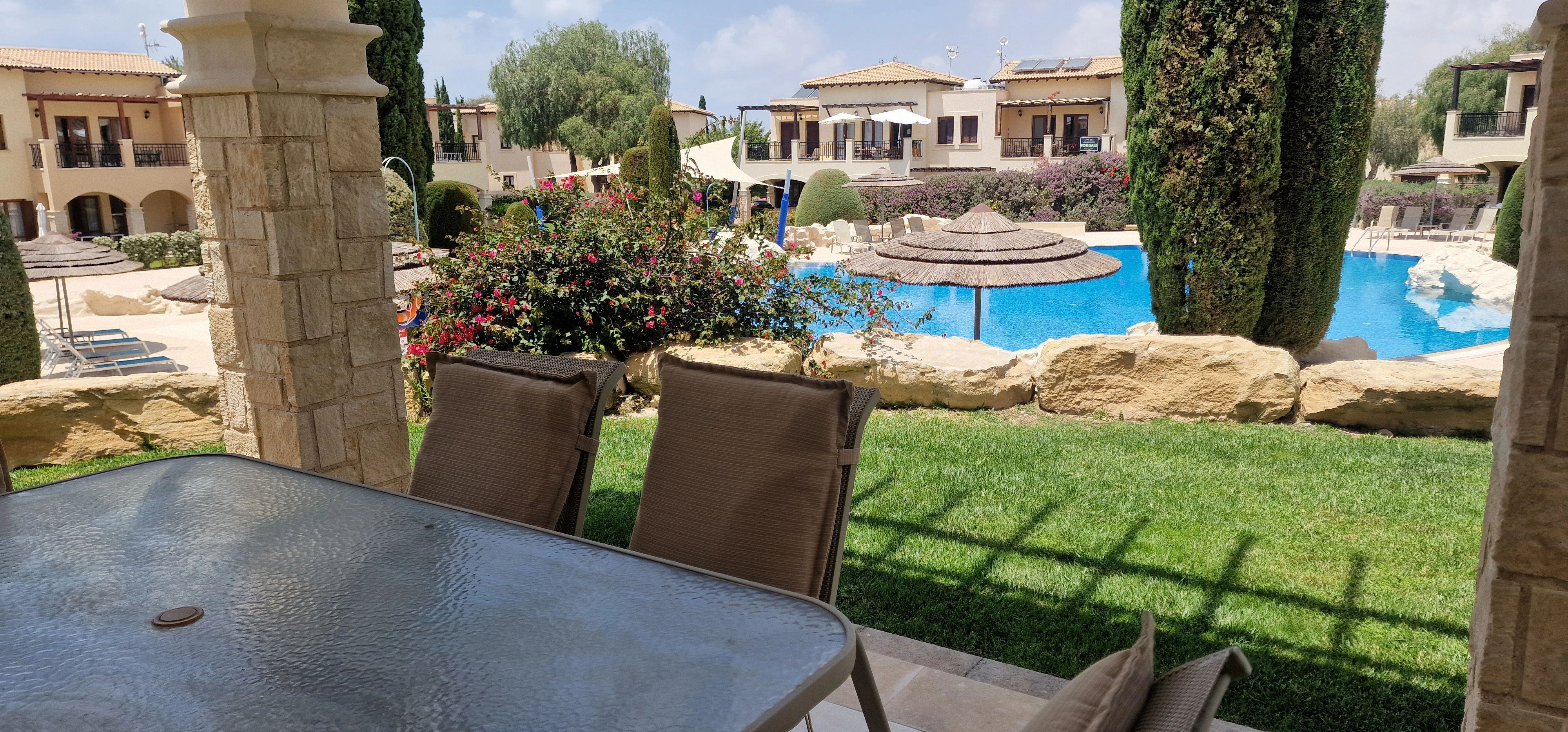
- Akamas Peninsula: A full day exploring the national park by 4x4, quad bike, or hiking. Visit the Blue Lagoon, Lara Bay turtle beach, and the Baths of Aphrodite. Best accessed from the village of Latchi/Lakki.
- Troodos Mountains & Cedar Valley: Drive up to the cool, forested heights of the Troodos range (about 90 minutes). Cedar Valley, home to the rare Cyprus cedar, offers tranquil hiking through ancient woodland at altitude.
- Limassol: Just an hour east on the A6 motorway. Explore the marina, the old town, Limassol Castle, and enjoy a different dining scene. Easily combined with a stop at Kolossi Castle or Kourion archaeological site.
- Lara Beach: An unspoiled stretch of sand on the western Akamas coast, famous as a nesting site for green and loggerhead sea turtles. Accessible via a bumpy dirt track (4WD recommended). No facilities, pure nature.
- Polis Chrysochous & Latchi: A laid-back fishing village 35 kilometres north of Paphos, known for its excellent fish tavernas, small marina, and the nearby Baths of Aphrodite. A pleasant half-day outing.
- Wine Villages of Pafos: Create your own wine route through Vouni Panayias, Kathikas, Pano Panayia (birthplace of Archbishop Makarios III), and Chrysorroyiatissa Monastery. Several wineries offer tastings and cellar tours.
- Kourion Archaeological Site: While technically in the Limassol district, this spectacular Greco-Roman city perched on a cliff above the sea is only 50 minutes east of Paphos. The restored amphitheatre, with its sea backdrop, is one of the most photographed sites in Cyprus.
- Kykkos Monastery via Cedar Valley: A longer full-day drive (about 2.5 hours each way via scenic mountain roads) takes you to the island's richest and most famous monastery, deep in the Troodos Mountains. Combine it with a stop at Cedar Valley for a spectacular mountain-and-monastery day.
- Aphrodite Hills Resort: Just 20 minutes east of Paphos, this hilltop resort complex offers a championship golf course, spa, tennis academy, and several restaurants open to non-guests. A great half-day excursion for those wanting a taste of resort luxury. See our Aphrodite Hills Guide for full details.
Most day trips from Paphos require a car, especially the Akamas Peninsula and wine villages where public transport is limited or non-existent. Book your rental in advance during peak season (June-September) to secure the best rates. A compact car is sufficient for paved roads, but a small SUV or 4WD is recommended if you plan to explore the Akamas dirt tracks or reach Lara Beach.
Contents